Archives

Jason Hart

We’ve been impressed with both the depth of information and how immediately actionable it is for us. We’ve worked with Rebecca (Bryant) for nearly 20 years, but she, with the rest of the Think Global team, really raised our expectations regarding what the right qualitative researchers can accomplish with mobile technology.test

Charlotte Havely

When Rebecca (Bryant) first proposed her Think Global colleagues for a multi-country project, I was concerned about using independent researchers in each country that were not as familiar with our business needs and our internal corporate culture. However, after a series of discussions and conference calls between all research firms, the actual execution of the plan was seamless. I not only experienced personal attention from the principal in each country, but each principal flawlessly aided in navigating the cultural gaps that are part of any multi-country research effort. At the end of the day, what we needed, of course, were actionable insights – ones that were well grounded in the cultural context of the respective countries. We got that and more. What a fantastic experience!

Mobile Unleashed: Dogs Go Mobile and Connect Online


Jack Ramsay of VisionsLive discusses the project with Ilka Kuhagen, Corette Haf, Julia Spink and Susan Abbott

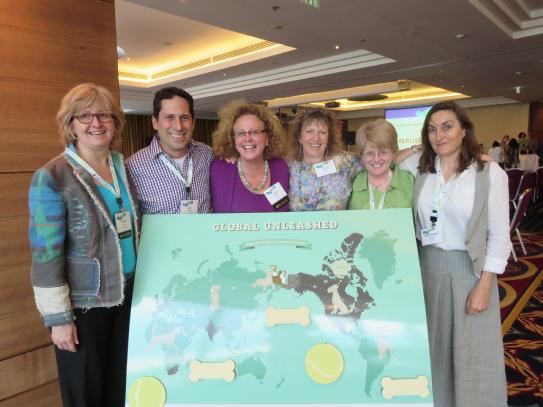
Think Global Qualitative Associates self-funded this multi-country project.  We chose the role of dogs in the lives of their owners because we felt this topic presented a great canvas on which to explore global differences. A new online platform (VisionsLive) afforded us an additional opportunity to see how this mobile-enabled technology might, or might not, support a global team of independent qualitative researchers. Participating countries included: Canada, Czech Republic, France, Germany, India, Mexico, South Africa, UK, and USA. Global Unleashed poster and researchersThink Global Qualitative associates (left to right) Susan Abbott, Jay Zaltzman, Ilka Kuhagen, Julia Spink, Rebecca Bryant and Veronique Gaboriau in Budapest, May 2014

 Our objectives

Objectives that guided the work in each country:

  • Understanding the role of dogs in our respective cultures
  • Testing a hybrid research methodology, including: Mobile lifestyle documentation, participant video, online discussion, online and mobile ideation (in selected markets)
  • Identifying opportunities for category innovation

The target audience

  • Primary caretakers of a companion dog
  • With computer and smartphone
  • Comfortable taking and uploading pictures & video
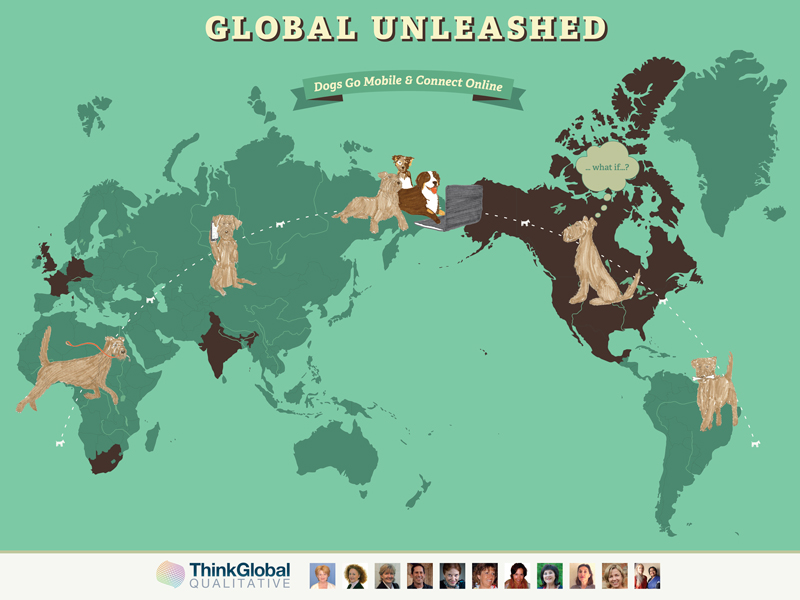
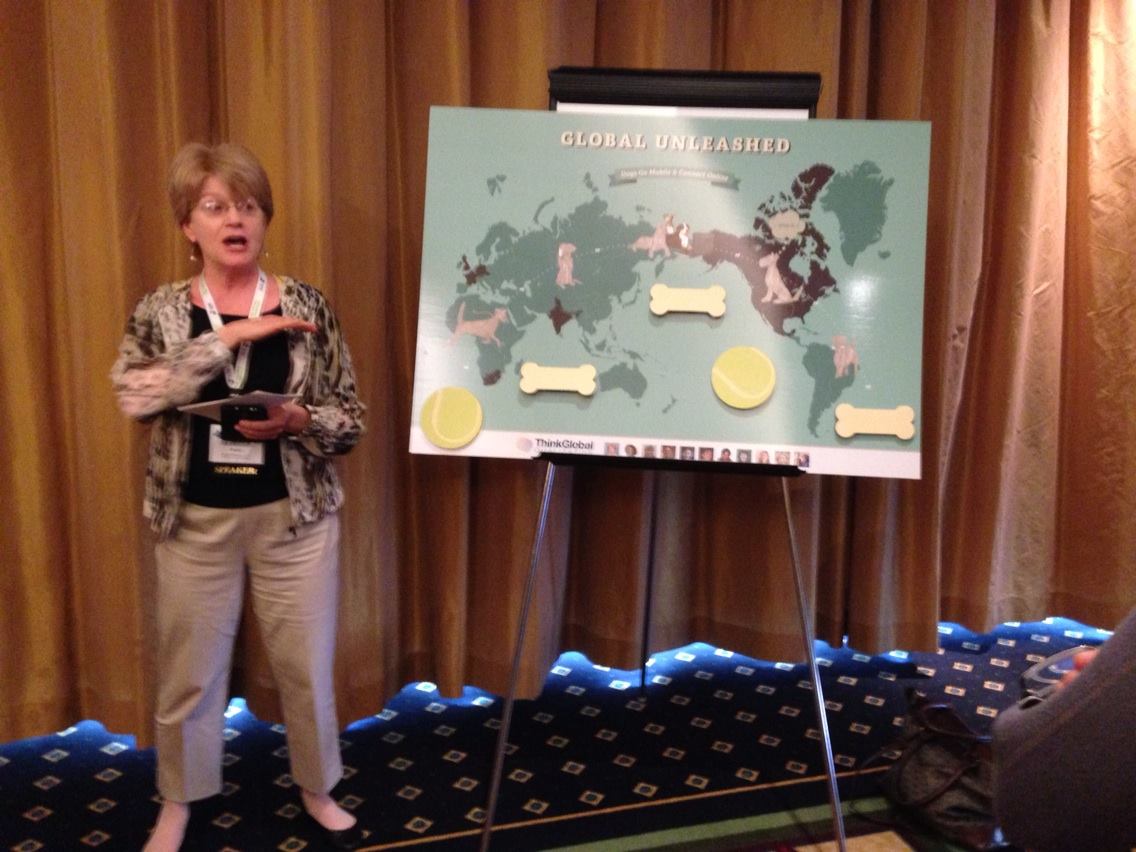
Global map with dog pictures for Dogs Go Mobile project

This is the Inspiration Zone Poster presented by Rebecca Bryant to the Worldwide Conference on Qualitative Research in Budapest, May 2014

The logistics of a multi-country immersion for insight

The mobile phone has become, in many ways, an extension of the person. Data shows that mobile phones are usually within 3 meters of the owner. As a constant companion, the handheld device is ideally situated to take us into the lives of consumers.

  • There’s an interesting example from our US study of a participant who, unbeknownst to the researchers, agreed to participate in the study during his honeymoon. Only when he “reappeared” after “disappearing” for a few days did we learn he had married during the study period! To him, he was going to have his phone with him – so, he was available!

Increasingly, the internet is accessed with a mobile device, especially in developing economies.(1) Today, that device might be a tablet, not a mobile telephone.This study required all participants to have a smart phone, which did mean a more affluent set of participants in India and South Africa.

We believe that incorporating new communications channels into qualitative insights projects offers our clients unprecedented access to people in their everyday lives. As researchers, we need to know the best ways to incorporate the technology.

We discovered that Google translate along with images helped researchers follow each other’s online discussion forums, even if it was in a language completely unfamiliar to the observing researcher. This enabled the whole project team to stay current with projects as they developed, regardless of the language of the project.

Traditional recruiting methods were used in some countries (Germany, Mexico, UK, Canada, India, Czech Republic). In USA, France, and South Africa, a mix of traditional recruiting, convenience samples and social media recruiting were used.

An inside look at the mobile diary

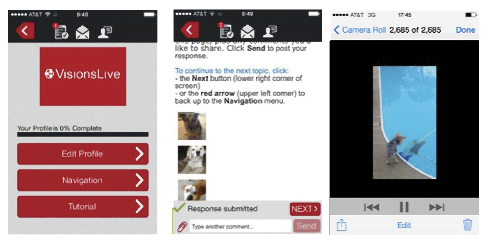
We started with a mobile diary, and here we see sample screen shots of what it looked like to participants.

Print1The diaries were private. Researchers could read the entries, but participants could not see each other’s diaries. In their diaries, participants were asked to chronicle each day’s activities as it related to their dog.

Fieldwork was not simultaneous. This meant that at each stage of the project, the design could change slightly to accommodate learning. It also was important for each researcher to adjust the tone and approach of the research to their culture and environment.

In the US, a Question of the Day was added to the daily diary exercise to explore how this might encourage participants to go beyond chronicling day-to-day activities.This resulted in robust data in a shorter period of time. Questions of the Day focused on the following:

  • Best aspects of having dog
  • Dog’s favorite things
  • Thoughts/attitudes toward training dog
  • Hardest/most difficult part of having dog
  • Products/service owner wants but cannot find

Dogs are a source of joy and unconditional positive regardPrint3

The dog is considered a member of the family, and typically described as such. A consistent theme is the joy and unconditional positive regard that the dog brings to the home and the owner.

I cannot imagine my life without a dog … She’s so sweet and loving … I love that when I … come home, she’s as excited as if I’d been gone for days.(Verbatim from US participant)

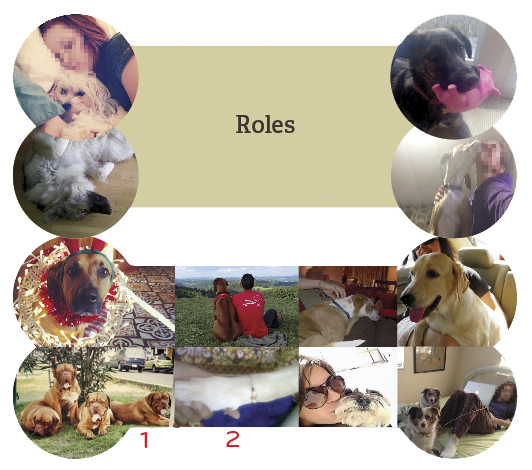
In Mexico, the concept of family extended beyond the dog’s human family to the dog’s canine family of origin, as the participant showed us in the photo marked “1” above.

Companionship is an important aspect of having a dog, and this theme emerged in many countries.

Companionship is the major aspect of having a dog … he is a part of our family. I would not trade that for anything. (Verbatim from US participant)

The dog is also a protector. The image marked “2” above shows a dog from India with a Rakhi tied to his foreleg. A Rakhi is a multi-colored thread that a sister ties on the wrist of her brother during an annual holiday. It symbolizes a sister’s love for her brother and the brother’s promise to protect the sister.

He is protective of me like a brother. (Quote from Indian participant)

And, of course dogs are included in holidays.The dog shown with a Christmas wreath and red reindeer antlers was only one example of many we saw of dogs dressed in costumes for the holidays, or just for having family fun.

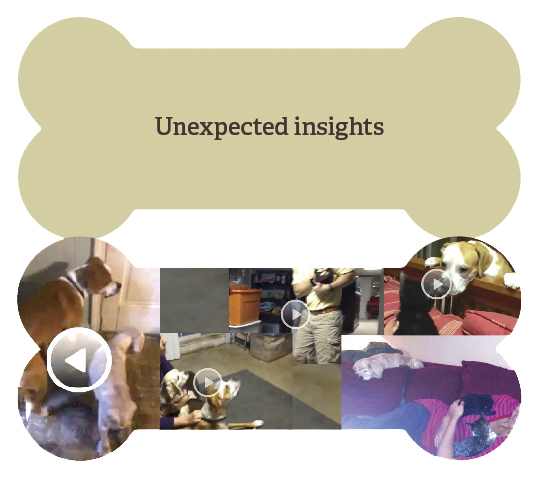
In additional to emotional insights, we also got unexpected insights.Print5

Mobile lets us watch events as they unfold

The series of pictures above are from videos shot over the course of a weekend. It provided the researchers with stage-by-stage documentation of a family introducing new kittens into the home.

It shows the dogs going from suspicious and scared, with the owners being fearful the dogs might hurt the kittens, through the introduction process, to acceptance. At the end we see a still shot of the whole group on the couch: owner and kittens stretched out on the couch with one of the dogs lying on the back of the sofa. The other dog is just off screen lieing beside the couch.

Online discussion forum for multi-stage idea buildingPrint2

After the diary, participants started a group discussion forum. Here you can see screenshots of what this looked like to the participants.  Researchers used the group discussion to:

  • Quickly build rapport among participants, and
  • As a platform where participants shared and compared their experiences with other dog owners. This included exploring products and services specific to the dog ownership experience

In the US study, we identified 4 potential product/service areas for further exploration. The Four C’s of innovation opportunities for mobile technology that we identified from the diary phase of the project follow.

Communication – participants want better 2-way communication between human and canine
Containment – participants want better ways to contain or track the dog. One example discussed was using GPS on a mobile device for this purpose
Caretaking – the ability to track the dog’s health history / health status / grooming / exercising with technology
Companionship Plus – the ability to interact remotely and/or use a smartphone to create a game for the dog and the human to play together

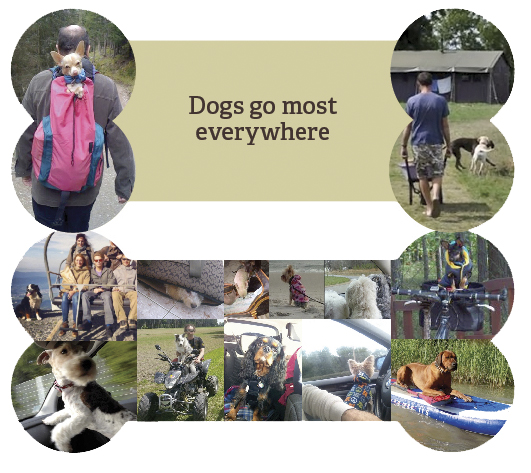
Owners want to take their dogs everywherePrint4

Dogs are a part of most every aspect of their owner’s lives, and go everywhere with them. The photos above show a dog in a bike basket in Czech Republic, on a motorcycle in Germany, in cars in many countries, and in a variety of other outdoor settings. Importantly, each dog is with the family.

In 1953, BF Skinner noted: “dogs excel at interpreting human cues.” This statement has been validated by considerable research since Skinner’s time. Based on this study, it is our contention that those in the pet product and service industries would be well served to watch trends in human products and services as these likely serve as a strong indicator of direction for future products and services for dogs.

Want more information?

A full report was prepared for each country. This brief article provides just a few of the highlights of the research. Please contact any of the associates for more information about the project or the methodologies discussed, or to arrange for a presentation.

Rebecca Bryant presenting to the Worldwide Conference on Qualitative Research in Budapest, May 2014

Rebecca Bryant presenting to the Worldwide Conference on Qualitative Research in Budapest, May 2014

(1) Accenture, 2012

Exploring a Mini World for Maxi Insight

As Online Communities or MROCs have become more established, many researchers have said they can only succeed with large numbers. Large groups of over a hundred respondents (or more) are used to gain qualitative insights. This research shows that a small group, selected carefully and facilitated with the toolbox of a qualitative researcher can provide deep insights for strategic marketing decisions.

This case study of research for an experience-based product allowed IKM to test mobile data collection in combination with an online discussion on multiple touch points of communication over a period of seven months with a group of 15 participants.

The client for this work was a a start-up: Mixtable. Mixtable is an online service for young professionals to meet offline to have fun and meet new people. It is not a dating platform.

Situation: Great ideas – Small budget!

A mini-community, with 15 active respondents was created. Participants used multiple ways of communication: input via a mobile app to collect data (photos, videos, emotions) and an online discussion forum for longer and more detailed responses and to build on the contributions of others. The start-up company was able to quickly feed burning questions into the community and get immediate feedback.

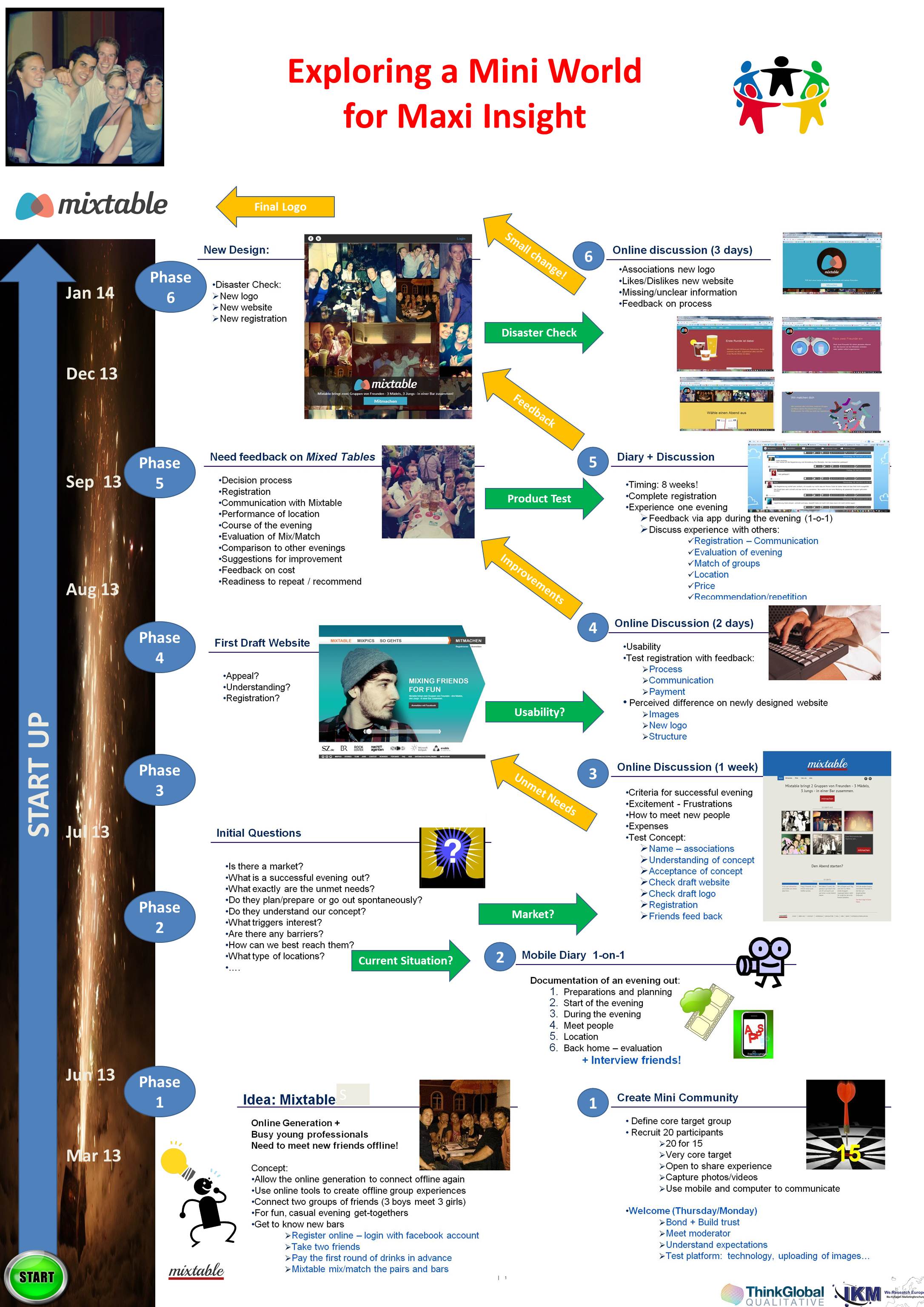
The research started with the first idea of the start-up: testing the concept. Later, and  on an ongoing basis, the mini-community provided insights that shaped the product, website and marketing tools. The research was done in six phases:

  1. Two-day group discussion (over the weekend) to bond and build trust – and also to get familiar with the technology of the platform
  2. Diary to capture an evening out via the mobile app
  3. Follow up online discussion for one week about the expectations for a successful evening out, description of the status quo and to gain feedback on the concept of the service
  4. Based on the feedback and the uncovered unmet needs the website for the online service was redesigned and an online usability test with group discussion provided insights on appeal, understanding of the concept, as well as the registration process
  5. To gain a better understanding on the acceptance of the service provided, participants were sent to actually test a Mixtable and provide feedback with a diary via the mobile app and follow up group discussion
  6. Based on these learnings the website and logo were finalized and with an online discussion finally disaster checked!

This process took place over a period of seven months.

Conclusions

IKM’s experience with the Mixtable project shows the potential for an ongoing community with small numbers. An ongoing community does not need to be massive in scale to be effective. A small community also does not require a special research platform, but can be effectively executed with current off-the-shelf mobile and online research tools to get excellent results. As always, we believe there is no substitute for a skilled moderator to plan and manage this type of project.

This is the image of the Inspiration Zone Poster presented by Ilka Kuhagen to the Worldwide Conference on Qualitative Research in Budapest in May 2014. A larger version is available here. (Click on the image and use Control + to zoom in on a larger version of the poster as it was presented.)

Kuhagen_MiniCommunities


Do You Really Need a Local Moderator? Pros and Cons

When you are doing multi-country qualitative research in other English-speaking countries, you need to decide if you want to use a local moderator or have the home-country moderator do the work in the other countries.

As a Canadian-based researcher, I am often asked for referrals to good Canadian field services by researchers based in the UK or USA who are planning to travel here to conduct the research. Or they may be planning to do the research online from their home location, the no-travel option.

There are pros and cons to both approaches. Here’s our take on the issue.

Taking your home-country moderator with you

Advantages

You know and trust this person whom you have worked with before. They know your team, they know your organization, they know your challenges, and they know your preferences in terms of reporting. So you can expect that communication with the researcher will run smoothly, just as it would in your home market.

Your home-country qualitative research consultant (QRC) is likely to see clearly the differences in the other market, because they are foreign to that market. So in this way, they are looking at the foreign market with the same perspective you have.

Disadvantages

Anyone not living in a culture will be challenged to interpret its nuances. Consider what happens when you are hearing simultaneous translation of a focus group conducted in a foreign language. Sometimes you will hear things that make no sense to you, even after being translated. They can be very small and simple, but still important.

My favorite example of this in Canada was hearing a group of university students in Montreal (French group) use the phrase “brown socks.” This meant very little to me or the client. The interpreter and local moderator were able to explain the meaning of this phrase. Interestingly, neither had heard this idiom used before, but they were in complete agreement about what was being said. The words boring, conventional, stuffy, or dull would be good synonyms.

Another disadvantage is that the local context may be poorly understood. Country differences that can affect marketing include understanding the retail distribution channels, the competitive set, local regulations, media environment, and potentially many other factors.

A moderator who is not a local will have to take the time to explore references that are not known or understood. If someone in one of my focus groups makes reference to “the red rocket,” CRA, double-double, 967-eleven-eleven, or two-four, I will know right away what they are talking about, even if it is being used as a metaphor for something else. (Translation: Toronto subway, federal income tax agency, a kind of coffee order at Tim Horton’s, how to order a pizza, and a case of beer) Only a local moderator will know such things. That’s what it means to be “local,” not just to a city, but to a region or a country.

Using a local researcher

Advantages

Making decisions about where best to field a project, or what criteria to include in recruiting screeners are all better handled by a knowledgeable local. A recruiter’s expertise is in finding the specified people, not in looking at objectives and advising what to specify.

A local researcher will have a good idea of what a project is going to cost to conduct in their own market, regardless of the methodology used. They will easily be able to navigate the dozens of decisions that must be made to formulate a field plan.

A local research consultant will already know some of the competitive dynamics in your category for their country. This could include things as arcane as knowing about government subsidies for certain types of home renovations. Or knowing how health insurance works; knowing what regions are suffering higher unemployment; knowing where specific skills or industries are clustered. Or understanding the basic structure of financial regulations that govern banking or electronic payments.

We could make a long list of these factors. Not only can your local researcher explain these factors to you as a client, but they can take these factors into account in designing the research, actually conducting the fieldwork, and in making their recommendations.

Disadvantages

If you think you want the lead researcher on the project to directly observe all the fieldwork, you will incur some additional travel expenses or the cost of live-streaming the groups. The additional time to brief, manage and debrief local professionals will also take time, and therefore create expenses.

Working with an unknown local resource can cause worry that the quality of the work may not be what you are used to. Not just the plan, or the actual fieldwork, but also the recommendations made.

Deciding which way to go

Researchers enjoy the chance to conduct groups in another country, and if the language is the same, this may seem like an easy option. If your researcher has category knowledge that is not easily learned, or located, you may feel this is a fair compromise.

I have conducted research with business people in other countries, usually using a voice+web approach. I work hard to brief myself about their local environment in advance, but despite these efforts, things continually come up that require some explanation.

Unless you have a good reason not to use a local moderator, you should go local. Work with someone who is deeply immersed in the region and culture of your target customer. You will get stronger actionable recommendations that take into account all the regional factors.

You can get the best of both worlds if you work with a team that has trusted local market resources in many areas. You can have all the strengths of having a local moderator, without any uncertainties about the quality of the work.

Behavioral Economics Leads to More Effective Research

Behavioral economics came about as a response to traditional economics, which assumed that, if a person had all the relevant information, they would make the rational decision. As market researchers, we know that’s not the case. Behavioral economics proves the point for us. It provides scientific support to the concept that people are not necessarily rational.

You’ve probably heard focus group detractors say that respondents don’t tell us what they really think. Behavioral economics shows they’re partly right: people assume they’re rational, so when we ask them a direct question (for example, ‘How do you go about choosing x?’) they look for the rational answer, and assume that’s how they would decide. But in reality, logic is not the main element in decision-making. Emotions, prior experiences and context play a huge role in their decision.

How it works

The challenge for market researchers: how do we get research participants to go beyond their rationalizations and uncover the things that truly motivate their decisions? The field of behavioral economics has uncovered the mechanisms of people’s irrational thought processes. Once we understand those mechanisms, we can use a variety of research techniques to uncover the truth.

Here are a few examples of some of the most common mechanisms and how they can help conduct research more effectively:

  • Behavioral economics has shown that, even though emotions play an important role in the decision process, people tend to ignore that fact. say bubble think bubble illustration When conducting research, we like to use techniques that give people permission to consider their emotions. One simple, yet powerful technique: we show a drawing of a person with a “speech bubble” and a “thought bubble.” Then we ask research participants to write what people say about the topic we’re investigating, and then what they think about that topic. The “say” part allows participants to give us their rational answer. Then the “think” part gives them permission to talk about the emotional aspect, especially since we phrase our question about what “other people” think. Behavioral economics has shown that people assume that others are irrational, even though they themselves are rational!)
  • Clients frequently want customers and prospects to evaluate a product and tell us how likely they would be to buy that product. But behavioral economics has demonstrated the “frame of reference” mechanism: people’s evaluation of a product is dependent on the other products in their consideration set. Therefore, we always recommend against evaluating a product on its own. Instead, we might set up a simulated shopping experience and ask research participants which product they would choose. If they don’t choose our product, we might ask what would have to change for it to be chosen. What feature would need to be added or improved? How much lower would the price need to be? What is it about their chosen product that makes it worth a higher price?

Benefits

The above are just some of the ways in which behavioral economics enables us to uncover what research participants truly think, which then enables clients to create more effective marketing communications. To learn more about behavioral economics, I recommend reading Dan Ariely’s book, Predictably Irrational.

Men’s and Women’s Relationships are Changing in Mexico

By Lázaro Martínez and Astrid Velásquez

Since the 1980s, formal “man and woman” relationships have been changing in Mexico. It was during this decade of economic crisis that many paradigms shifted. The economic crisis contributed to accelerating changes in the male and female traditional roles, mostly due to increasing female participation in the workforce.

This change triggered the empowerment of women, not only in the economic or labor context, but by creating a type of “gender balance.” Some of the most relevant changes are:

  • Increased presence of women as chief of the household, meaning women earning more money than men. (Just like that old saying: Who pays the piper, calls.) Currently there is one female directed household vs. four directed by men.
  • More men participating in household chores, like cleaning, taking care of kids, grocery shopping, etc.
  • Women being explicitly more sensual and sexually proactive: the “approach” is no longer only in the hands of males.

During this decade and the ‘90s we saw an increase in the number of women smoking and drinking alcoholic beverages. For example, tequila consumption exploded during the ‘90s when women started drinking it because it was totally a “manly” beverage. Tequila also became one of the few products that provided a sense of Mexican identity. (The economic crisis turned into a moral crisis, where no government or institution in the country was believable or trustworthy, and where traditional roles were broken. Tequila brought back a little of the pride of being Mexican … which by the way, was a brilliant marketing approach.)

On the other hand, economic troubles in the household and work environment contributed to increased stress levels that ended up in arguments and discussions among couples (66{a75d112c1ea8efd8d548fa031ca8ffd35154d8dad1867f6f7c53f2160deae159} of people saying they had felt stressed in the past month or more). Empowered women were no longer willing to maintain their traditional role of submissiveness. And men felt lost in terms of knowing how to communicate with their female partners.

The level of divorce increased almost 50{a75d112c1ea8efd8d548fa031ca8ffd35154d8dad1867f6f7c53f2160deae159} during the ‘90s. And during the past 15 years, we’ve seen a dramatic drop in the number of “regular” couples or families living together, with an increase in other types of households:

  • Traditional families (mom, pop and kids)  dropped 8.2{a75d112c1ea8efd8d548fa031ca8ffd35154d8dad1867f6f7c53f2160deae159}
  • Gay families increased 22.7{a75d112c1ea8efd8d548fa031ca8ffd35154d8dad1867f6f7c53f2160deae159}
  • Single mothers increased 20.7{a75d112c1ea8efd8d548fa031ca8ffd35154d8dad1867f6f7c53f2160deae159}
  • Single male households increased 15.7{a75d112c1ea8efd8d548fa031ca8ffd35154d8dad1867f6f7c53f2160deae159}
  • One person households increased 28.1{a75d112c1ea8efd8d548fa031ca8ffd35154d8dad1867f6f7c53f2160deae159}

Couples seem to be avoiding commitment, not only because of the uncertainty of the implications of living together as a couple, but also because of the uncertainly of living in Mexico.

There also is a tendency for “utilitarianism” to prevail; people keep only those roles and behaviors that are useful. (This is also reflected in their consumption patterns).

So, we know that Mexico is changing: the female and male roles are being modified and consumption behaviors are shifting.

We need to keep an eye on how Mexicans are feeling in order to understand their consumption preferences and predict their future needs.

Lázaro Martínez and Astrid Velásquez are partners at NODO Market Research in Mexico. NODO is a full service research company with local offices in Mexico and Colombia and covering all of Latin America.

During the past 12 years, NODO has been studying the “social mood” of consumers and shifts in how they feel. It uses this information as a key aspect to understand purchasing behavior, advertising preferences and new trends in the market.

Susan Baron

Corette is a pleasure to work with. She is very knowledgeable; a creative problem solver who goes above and beyond, and is very easy to work with. In conducting research for us in South Africa, she arranged every detail for a complex project that went off without a hitch. She won over the end client with her can-do attitude and her ability to make things happen. Her work was ‘spot on’ and the final report was comprehensive and well written. I would highly recommend Corette.

Using Meditative Focus Groups to Improve Products and Communication

A new qualitative methodology “Alive Dream” helps people get back to key moments connected to the product or category while in a meditative state of mind, or deep relaxation. This enables them to “live through” the key emotions connected to the brand or category and helps create a map of  “emotional imprints” which can identify the brand’s emotional territory.

The Alive Dream technique uses elements of deep relaxation based on Milton H. Erickson’s hypnotherapy and was originally developed by Danone France. It has been rolled out across Europe over the past two years.

How it works

During the meditative state, a virtual “mentor“ helps respondents further develop the experience with brand or category, which serves as a source of inputs for further product/brand development.

For brand teams, the results of the research serve as a clear guide for which emotions to use to build the communication, as well as a strong source of ideas for new product development. Additionally, the research often uncovers incredibly strong insights, as people tend to be much more open in the meditative state of mind and even share their inner feelings and thoughts.

Considerations

The Alive Dream methodology is suitable for new product development, as well as communication testing, such as the recent testing of new coffee ad proposals from Sara Lee.

In this test, respondents in deep relaxation described their favorite coffee and later confronted this idea with several storyboards suggesting how to improve it both in terms of product demonstration as well as in terms of the story relevancy.

From the client’s perspective, the biggest benefit is that consumers spontaneously participated in the ad adjustments and came up with a number of specific ideas for execution, such as how to increase its relevance and motivation to purchase the advertised coffee.

Benefits

The main advantage is that real experience is taken right from “deep inside” in the state of deep relaxation so the respondents are able to work with the experience of the taste, fragrance, or design of the product with more prototypes or ads.

Other advantages of the methodology:

  • Consistency of opinion during the evaluation of large number of stimuli (the idea originates during deep relaxation and remains engraved as a “benchmark” in the minds of the respondents during the evaluation of all stimuli)
  • Negligible influence of other respondents (because of the strong experience of deep relaxation, respondents hold their own view of the studied stimuli very well)
  • Ability to actively participate in co-creation and editing of the product or refining the storyboards